It's a Numbers Game

The tangible results of our everyday lives.
Numbers.
Our weight, our height, our shoe size. How much we get paid, how much did the government take. What time to get there, how early you showed up, or more accurately how late. Numbers are engraved everywhere. Along with that, they’re ancient. The decimal place-value system, fancy for modern numbers, was invented in 6th century India. You read that correctly, the system we use for everything is fifteen hundred years old.
We use them every minute and they’re old as dirt, but who determined the lucky ones?
Culture, Faith, and Casinos.
In 1895 Charles Fey invented the Liberty Bell (not the actual bell), the blueprint for modern slot machines. Among the symbols used in his new game were horseshoes, stars, and card suits. Later, companies like Mills Slot Machines adopted Fey’s game mixing in a few symbols of their own, one of them being the number seven. By 1950 during the Las Vegas casino boom, triple sevens had become the universal symbol for hitting the jackpot.
Masters of psychology.
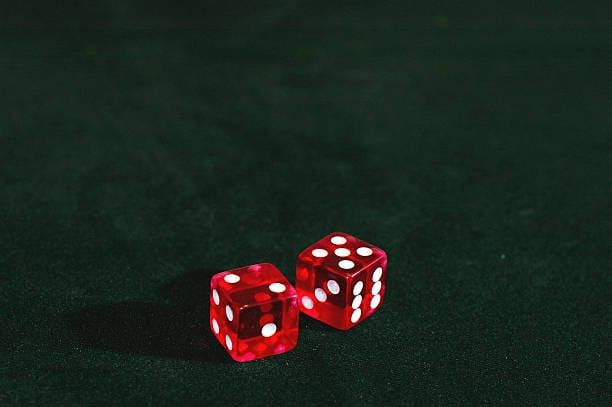
Casino executives chose to emphasize seven for a number of reasons. Seven is mathematically unique, being the only number less than ten that can't be multiplied or divided to produce a number in the 1-10 range. A simple thing that has a big effect. As far as mathematics that only scratches the surface of the number. In the game of craps, seven has the highest probability of being rolled with 16.67%. Casinos also accounted for the existing belief in western culture revolving around the lucky number seven, creating a sense of false hope or comfort.
That existing belief relied heavily on religion. Depending on the version, the number seven appears more than seven hundred times in the Bible. God completed his creation by the seventh day, declaring it holy and a day of rest. Jesus says we must forgive not seven times, but seventy-seven times. God's final judgment in the book of Revelation includes the number several times. Seven churches, seven seals, seven trumpets, and seven spirits.
Almost a hundred years ago, a gambling addict hijacked your faith and put it in his casino game.
The house played no hand in the popularity of unlucky numbers though. That came about all on its own.
Triskaidekaphobia, the clinical term for the fear of the number thirteen.
Thirteen has always been the awkward guy at the party next to twelve. Twelve being a highly composite number, divisible by two, three, four, and six. Might seem boring but what can thirteen be divided by? There are twelve months and twelve hours. Religiously, the number thirteen represents betrayal. The Last Supper consisted of thirteen people. Jesus and his twelve disciples, one of which would betray him.
In the spring of 1907 Thomas W. Lawson, a well-off author, stock broker, and entrepreneur, published Friday The Thirteenth. A fictional book about a broker who plots to crash Wall Street. The book did well and fueled the modern superstition of Friday the thirteenth we know today. Being the first time these two were mentioned together as the double whammy of bad luck.
Along with his other business ventures Thomas owned a cargo ship. Named The Thomas W. Lawson, modest. The ship was built to transport coal along the coast of the United States and overseas. Shortly after releasing his book, his ship wrecked off the coast of England. Seventeen deaths.
The date in England? Saturday, December fourteenth, 1907.
The date back home? Friday, December thirteenth, 1907.
Whether it's religion or Thomas's ego, the fear of thirteen lives on.
Otis Elevator Company, the largest elevator manufacturer in the world recorded that 85% of their manufactured elevator panels exclude the number thirteen at the discretion of the client. Hotels, apartment buildings, commercial real estate all opting out to avoid real financial loss. A study done by CityRealty in 2015 found that 91% of residential buildings in New York tall enough to have a thirteenth floor, don’t. Tall buildings aren't the only business that has to look out. Roughly 60% of global airlines exclude the thirteenth row. The skeptics have to travel too.
When you mix in a Friday all hell breaks loose.
A study performed in 2004 by Dr. Donald Dossey, a behavioral scientist, suggests that 17 to 21 million Americans suffer from mild anxiety about Friday the thirteenth. Leading to a pause or dip in the economy every time one rolls around. Air travel drops, major purchases are paused like closing on your home or buying a car. The amount of people that call out sick spikes significantly. The study estimated that every time the thirteenth is on a Friday there's an $800 million freeze.
So America has a number problem? Yes and no.
All over the world each culture has its own superstitions on lucky and unlucky numbers. In several East Asian cultures, like China and Japan, anything associated with a four, fourteen, twenty-four, forty, are all bad luck due to the pronunciation of the number sounding like the word death. Elevators in these cultures skipping all of the above at times.
In Italy the number seventeen is bad luck due to its roman numeral. XVII, rearranged spelling out the latin word VIXI, “I have lived.” as in past tense. On the contrary, the number thirteen is lucky in Italian culture. (Somebody tell them about The Thomas W. Lawson).
The point being, we all have something that jumps out at us. A number we once speculated over that now brings confirmation, or denial. Stemming from our religion, our culture, or maybe just because. That being said, what's your number?
Silver linings
- The Thomas W. Lawson was the only seven-mast sailing ship ever built, the ultimate jinx
- A baker's dozen has thirteen donuts, the only good thirteen